The Niger Delta is one of the world’s largest wetlands and also one of its most valuable oil-producing regions. For decades, oil spills, gas flaring, waste dumping and failed clean-ups have devastated communities who depend on its land, rivers and creeks for food, water and livelihoods. Amnesty International’s research has shown that Shell’s record there is not only an environmental scandal. It is a human rights crisis. Weiterlesen
Ecuador: Guerreras por la Amazonía demand the elimination of gas flares five years after landmark ruling
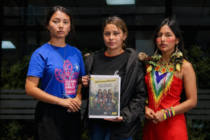
Amnesty International joins the call from the Guerreras por la Amazonía (GxA, Women Warriors for the Amazon), who, five years after securing a landmark ruling requiring Ecuador to eliminate oil industry gas flares located near populated areas and provide reparations to affected communities, continue to demand its full implementation. Weiterlesen
Global: Extreme heat exposes deadly collision of climate change, corporate greed and political failure as rights burn
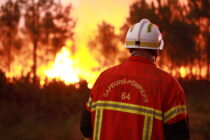
Responding to extreme heat related weather events around the globe, including widespread wildfires, drought and floods, Marta Schaaf, Programme Director for Climate, ESJ and Corporate Accountability at Amnesty International said: Weiterlesen
Honduras: Cedeño won’t disappear, it will relocate and persevere
The coastal community of Cedeño, in the Gulf of Fonseca, is facing a human rights crisis caused by the impacts of climate change, including coastal erosion, rising sea levels and the lack of an adequate state response, Amnesty International said today as it launched its new report, Cedeño: “Losing everything, home and children”. Climate displacement from the Honduran Pacific coast. Weiterlesen
What are ‘critical minerals’ and why do they matter for human rights?
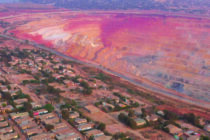
Global demand for minerals is rising fast. This is being driven by the shift to renewable energy and electric vehicles, and increasingly by the rapid growth of artificial intelligence (AI) and data centres. Minerals such as lithium, nickel, and cobalt are essential for these technologies, but extracting them often comes at a high cost to people and planet. Amnesty International’s research, spanning more than a decade and many countries, shows that Weiterlesen
Türkiye: Environmental defender on trial: Esra Işık
Esra Işık, a 26-year-old environmental human rights defender, is facing prosecution under Articles 265 and 125 of the Turkish Penal Code for allegedly ‘’preventing a public official from performing their duty’’ and “insulting public officials.” She was detained on 30 March after taking part in a peaceful protest against an urgent expropriation decision affecting villages Weiterlesen
Global: Governments heading to Bonn must act on climate commitments to protect human rights
Press release | First published: here | 5 June 2026 States attending the June Climate Meetings next week in Bonn, Germany must use the talks to turn climate commitments into a concrete actionable rights-centric agenda for November’s COP31, Amnesty International said today. What happens in Bonn matters because it will shape the negotiations, priorities and level of ambition that governments carry into COP31 in Antalya, Türkiye later this year. These meetings are an important chance for governments to show they are Weiterlesen
Joint Letter: Extend World Bank Climate Change Action Plan
This joint open letter signed by over 80 civil society organizations expresses concern regarding the pending expiry of the World Bani’s Climate Change Action Plan and calls for it to be extended pending development of a new Action Plan. The letter also urges the World Bank to strengthen its Paris Agreement alignment process and the quality and transparency of its climate finance provision, to ensure its energy investments are aligned with the I.5°C target and to integrate climate change into the revision of International Finance Corporation (IFC) and Multilateral Investment Guarantee Agency (MIGA) Performance Standards as part of broader due diligence efforts. Weiterlesen
Global: New UN climate accountability resolution an important step in advancing climate justice
Responding to the adoption of the climate accountability resolution at the United Nations General Assembly by overwhelming majority today, Camile Cortez, Senior Campaigner on Climate Justice at Amnesty International, said: Weiterlesen
“For frontline Indigenous Peoples, the cost of fossil fuels is not theoretical” – Chief Dsta’hyl on land, climate change and our collective future.
Amnesty International has called on the government of British Columbia to ensure the end of the criminalization of Wet’suwet’en and other Indigenous land defenders. Here, Chief Dsta’hyl reflects on his critical work to protect Wet’suwet’en land, rights and the environment we all depend on. Weiterlesen