
First published: here | 27 November 2025
Two years ago, a group of activists known as Scientist Rebellion blocked road and river traffic in Le Havre, Northern France, to oppose a new floating liquefied natural gas terminal.
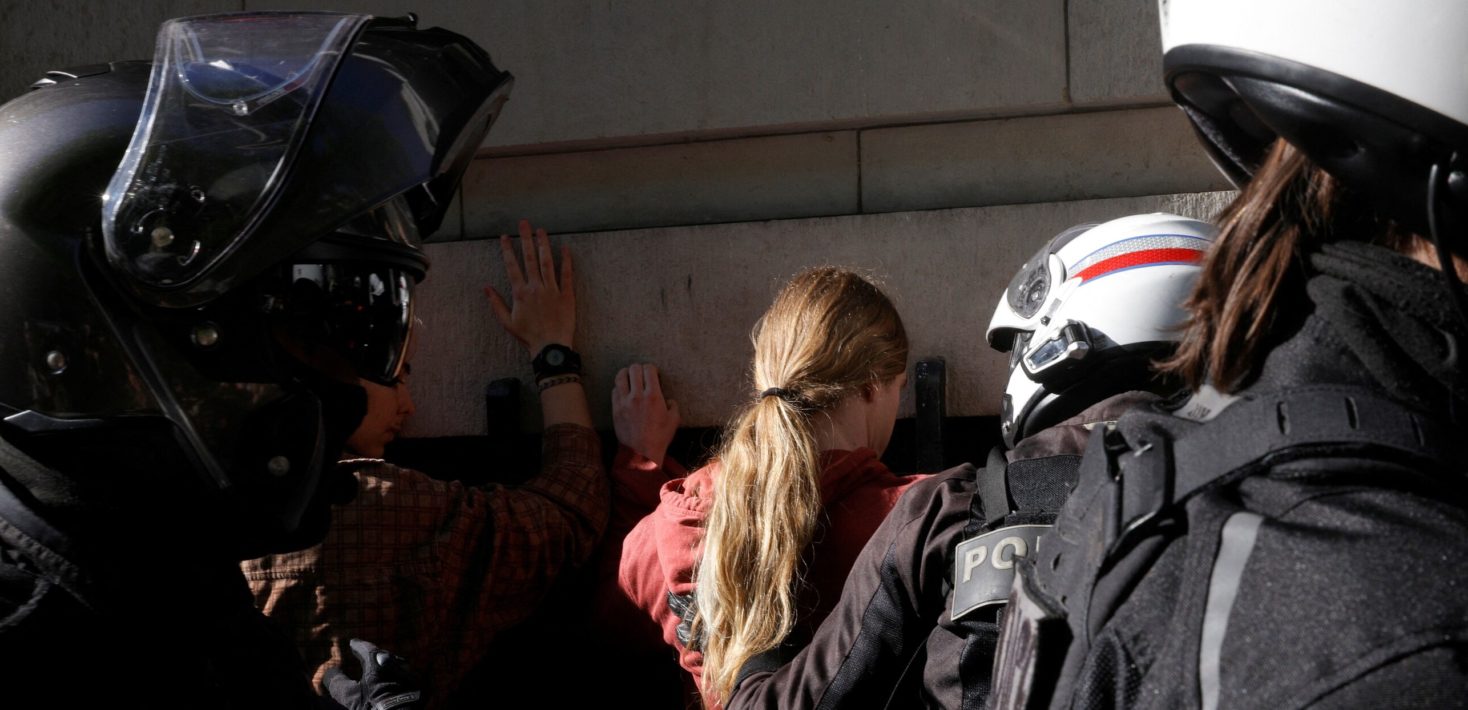
Some activists locked themselves to the barriers on either side of the road, while others glued themselves to the asphalt. Police arrested them a few hours later and placed them in pre-charge detention for 24 hours.
Libre* is one of the 16 activists who took part in the protest. Each activist received a €200 criminal fine for blocking traffic, however they all chose to oppose and stood trial before the Havre First Instance Court, stating their acts were protected by freedom of expression. Two years later, on 10 February 2025, the Court acquitted the activists.
Libre’s case features in a new briefing developed by Amnesty International, APCOF and Suaram, together with the Campaign to Decriminalize Poverty, Status and Activism. Dissent on Trial: Strategies to Counter Rising Criminalization of Activismshares strategies activists, lawyers and civil society organizations can pursue to challenge the criminalization of various forms of activism including civil disobedience.
In this story, Libre reveals what inspired her activism, and why she’s hoping her engagement will lead to changes.
*Name has been changed to for security purposes
I’ve been aware of the effects of climate change since I was young. My parents used to find little notes I’d written such as “be careful with water” or “watch your waste”. It was a gradual journey, where I started taking small actions at home such as making posters for my parents, before trying to implement eco-friendly ideas in my classroom.
After that, I joined youth climate marches and organized scout projects, where we would pick up trash on beaches. However, I started to realise that youth climate marches weren’t as effective as I’d hoped, so I decided to turn to civil disobedience, hoping it makes a difference.
As part of Extinction Rebellion, I currently campaign on climate and environmental issues, taking on companies responsible for the climate and social crisis harming people, whose lives and lands they exploit.
The dangers of repression
I have faced dangers for taking part in these actions. While I was protesting against a giant water reservoir in south-western France, it turned extremely violent and I was genuinely afraid for my life. Police were shooting at us with rubber bullets and tear gas was being thrown into the crowds. I’ve also been kettled several times, deprived of access to water or toilets, as well as held in custody, which had a huge psychological impact on me.
In many ways, it’s nothing compared to the dangers others face due to climate change and I’m lucky I haven’t yet faced a real threat to my life because of climate disruption. However, when your life is put in danger because of activism, it’s still significant.
Repression is having a huge effect on me and my family. When my home was raided by mistake in connection to another case, my little sister was there. When I’m held in custody or go to court, my parents and partner come, so it’s stressful for them too. I’ve suffered nightmares. There are also legal consequences — for example, if I get a record, I can’t work anymore. I also miss workdays for trials, actions, and time in custody. It has affected my ability to travel. The last time I tried to go to England on the Eurostar, I was stopped at the border and questioned. They asked for my papers and why I was going there, because I think I’m flagged — maybe even as a “S file” (a security watchlist).
Climate change and its consequences
Sometimes, I feel like I am in a constant state of stress about the cause itself — climate change and its consequences — because I see that despite everything we do, very little changes.
Personally, I haven’t yet experienced the direct impacts of climate change, at least nothing beyond heatwaves. But I’ve witnessed small things.
For example, I think my grandparents’ house is collapsing due to global warming, especially because of soil issues. I also have a friend in Madagascar, who has experienced massive cyclones. It’s hard, as they’re not the ones causing climate change, yet they’re the first to suffer from it.
What we’re doing is for everyone
I wish authorities would realize that we’re not against them. We’re also doing it for them. We don’t want their children to suffer from climate change. It doesn’t bring us money or any personal benefit. It’s not for personal gain — it’s for all living beings. Everyone has a stake in this. By silencing the scientists and stopping us from taking action, authorities are putting themselves on the wrong side of history.
We show our humanity when we’re able to see each other as equals, with respect and kindness for everyone, and when we act knowing that what we do has a positive impact on humanity and on all living beings.
My commitment is having an impact
Despite everything, I try and remain hopeful – especially when we manage to carry out actions that make sense, that speak to people. I also remind myself that small initiatives are taking place everywhere. And I tell myself that even if we don’t succeed, at least I’ll have done my part. I’ll be able to say to my children, and myself, I did what I could. That’s what keeps me going.
I know my work is having an impact. I’ve already had an impact on my loved ones by helping them understand the situation, as well as realize what state our rule of law is really in. Through the harsh repression we face as activists, my friends and family can see what that says about our democracy.
Then there’s the impact of our actions. Perhaps it feels small compared to what they cost us, but there is impact. We’ve seen results. And our actions make people think or at least force them to ask themselves questions. To me, that’s what matters.