Category: Reports & documents

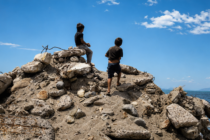
Honduras: Cedeño won’t disappear, it will relocate and persevere 

The coastal community of Cedeño, in the Gulf of Fonseca, is facing a human rights crisis caused by the impacts of climate change, including coastal erosion, rising sea levels and the lack of an adequate state response, Amnesty International said today as it launched its new report, Cedeño: “Losing everything, home and children”. Climate displacement from the Honduran Pacific coast. Weiterlesen

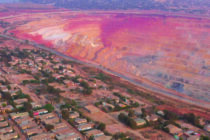
What are ‘critical minerals’ and why do they matter for human rights? 

Global demand for minerals is rising fast. This is being driven by the shift to renewable energy and electric vehicles, and increasingly by the rapid growth of artificial intelligence (AI) and data centres. Minerals such as lithium, nickel, and cobalt are essential for these technologies, but extracting them often comes at a high cost to people and planet.   Amnesty International’s research, spanning more than a decade and many countries, shows that Weiterlesen

Implications of sea-level rise on human rights

This submission to the Human Rights Advisory Committee highlights the diverse human rights impacts of sea-level rise, with particular reference to the impacts on people living in the low-lying atoll nations of Tuvalu and Kiribati, and in relation to their displacement associated with sea-level rise and climate change more generally. It also shows how similar effects are being experienced around the world, especially people living in small island states or in coastal areas in lower income countries that bear little responsibility for climate change – including in Bangladesh, Fiji, Honduras Pakistan, and Senegal. The submission ends with recommendations to states to avert, minimize and address these impacts. Weiterlesen

Human rights as a compass for transitioning away from fossil fuels in a just, orderly and equitable manner

This submission in response to the UNFCCC COP30 presidency’s invitation argues that a just transition away from fossil fuels must be explicitly anchored in human rights law and principles; the goal of limiting global temperatures to 1.5°C above pre-industrial levels; the “polluter pays” principle; and equity. It must recognize that the climate crisis is, at its core, a human rights crisis whose impacts fall disproportionately on marginalized individuals and groups and thus must be tackled as an issue of climate justice that interrogates the root causes of the climate crisis and how human-induced climate change builds on and magnifies inequalities. Weiterlesen